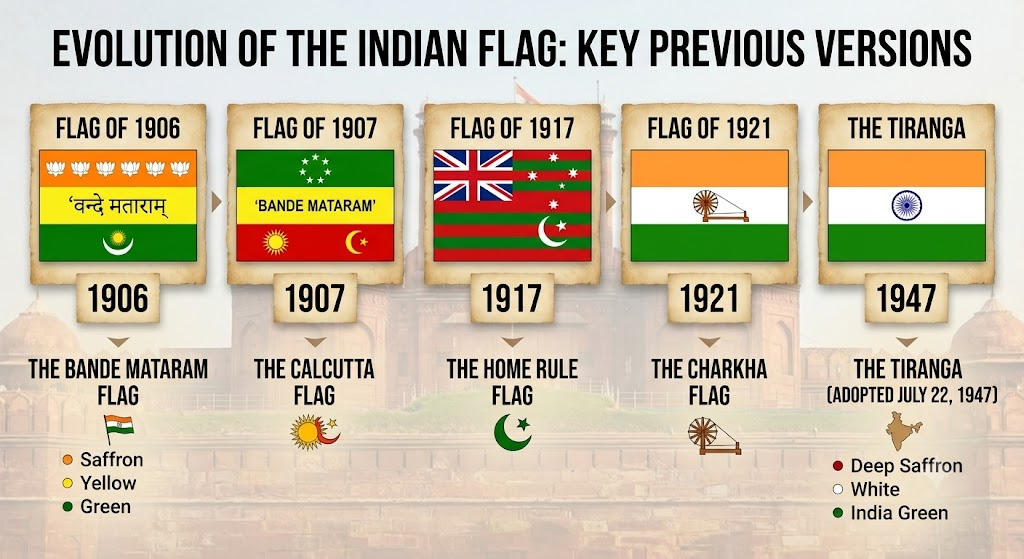
1. The Saffron (Kesari): First things first – it’s not “orange”. Saffron for strength, courage, and sacrifice. It represents the spirit of selflessness and the willingness to give up personal gain for the good of the country. It’s the fire we carry and the ambition that grows everyday.
2. The White: signifies peace, truth, and purity. It serves as a reminder to keep the nation’s path guided by truth and light. It’s the calm in the middle of Chaos.
3. The India Green: Fertility, growth, and auspiciousness of the land -our roots; It showcases the country’s deep connection to life and the soil. The very soil we came from, no matter how many miles away we are.
4. The Navy Blue (The Dharma Chakra): 24 spokes that signify life in motion. It represents 24 hours of the day, symbolizing progress, movement, and the continuous cycle of life.
5. The current India flag was commissioned on July 22, 1947, during a meeting of the Constituent Assembly, just days before India’s independence on August 15, 1947
6. The basic design of the flag was created by Pingali Venkayya, an agriculturalist and freedom fighter from Andhra Pradesh. He studied flags from around the world for years before presenting the initial concept to Mahatma Gandhi
7. By law, the flag is traditionally supposed to be made of Khadi—hand-spun cotton, silk, or wool. Using any other material for an official flag was historically considered a punishable offense with jail time under the Flag Code of India. The Karnataka Khadi Gramodyoga Samyukta Sangha (KKGSS) in Hubli is the only licensed manufacturer and supplier of the official, Bureau of Indian Standards (BIS)-approved Indian flag.
8. The largest Indian national flag ever flown on a monumental flagpole is located at the Attari-Wagah Border between India and Pakistan. Hoisted at a staggering height of 360 feet (110 meters), the flag itself measures 120 feet in length and 80 feet in width. It is so massive that it is clearly visible from Lahore, Pakistan.